cmAngio®
Simple. Safe. Fast. Effective.
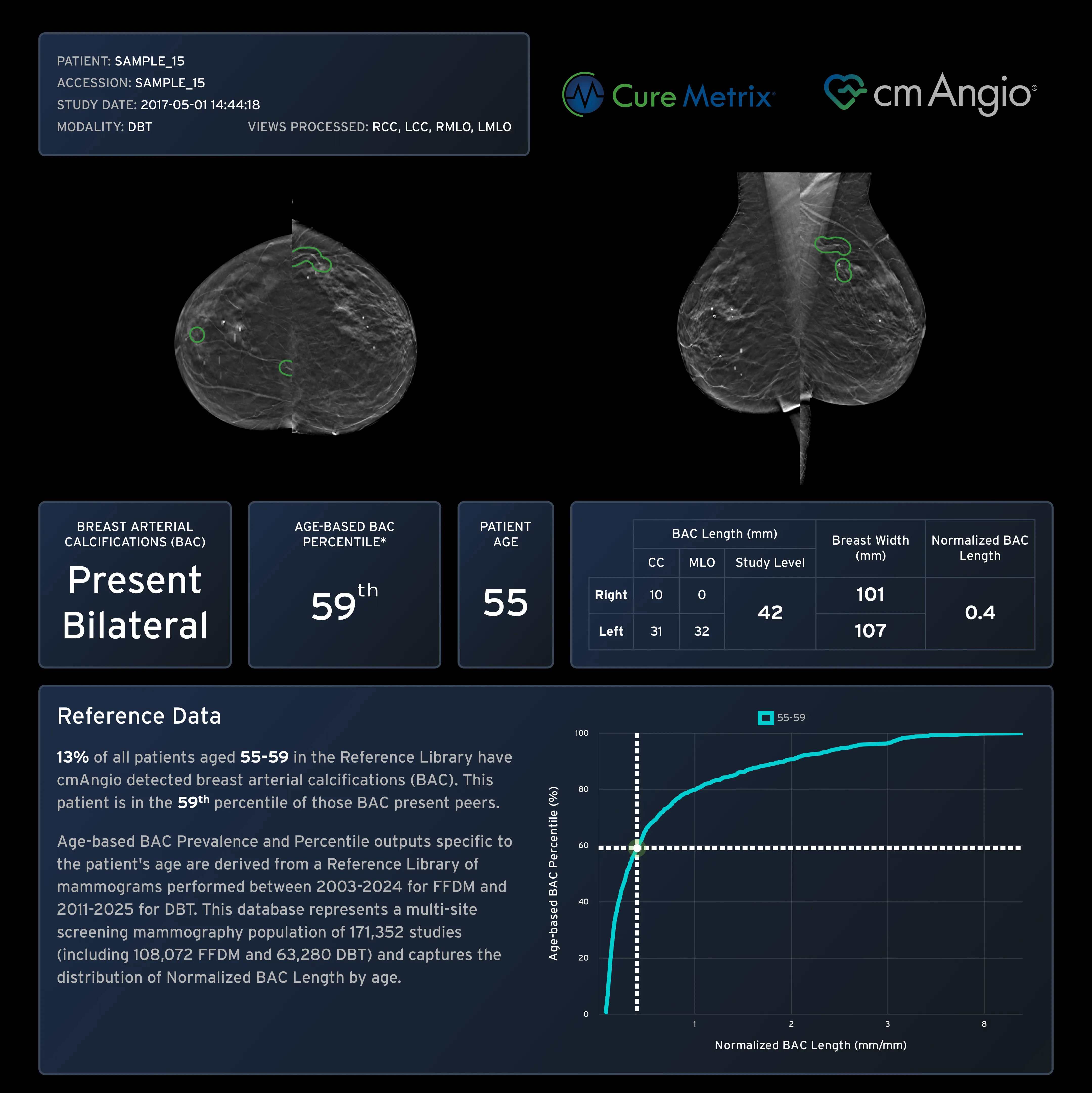
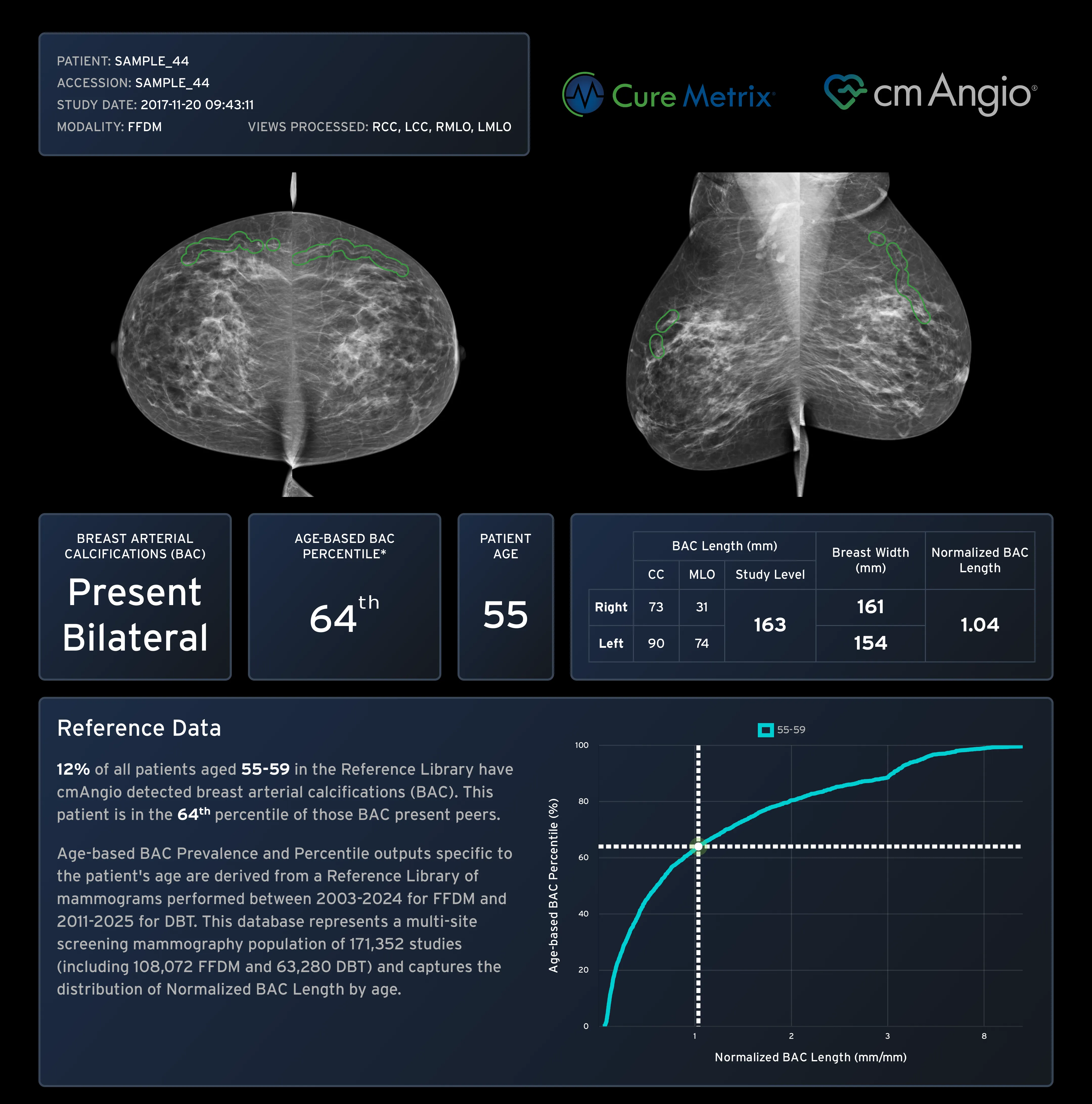
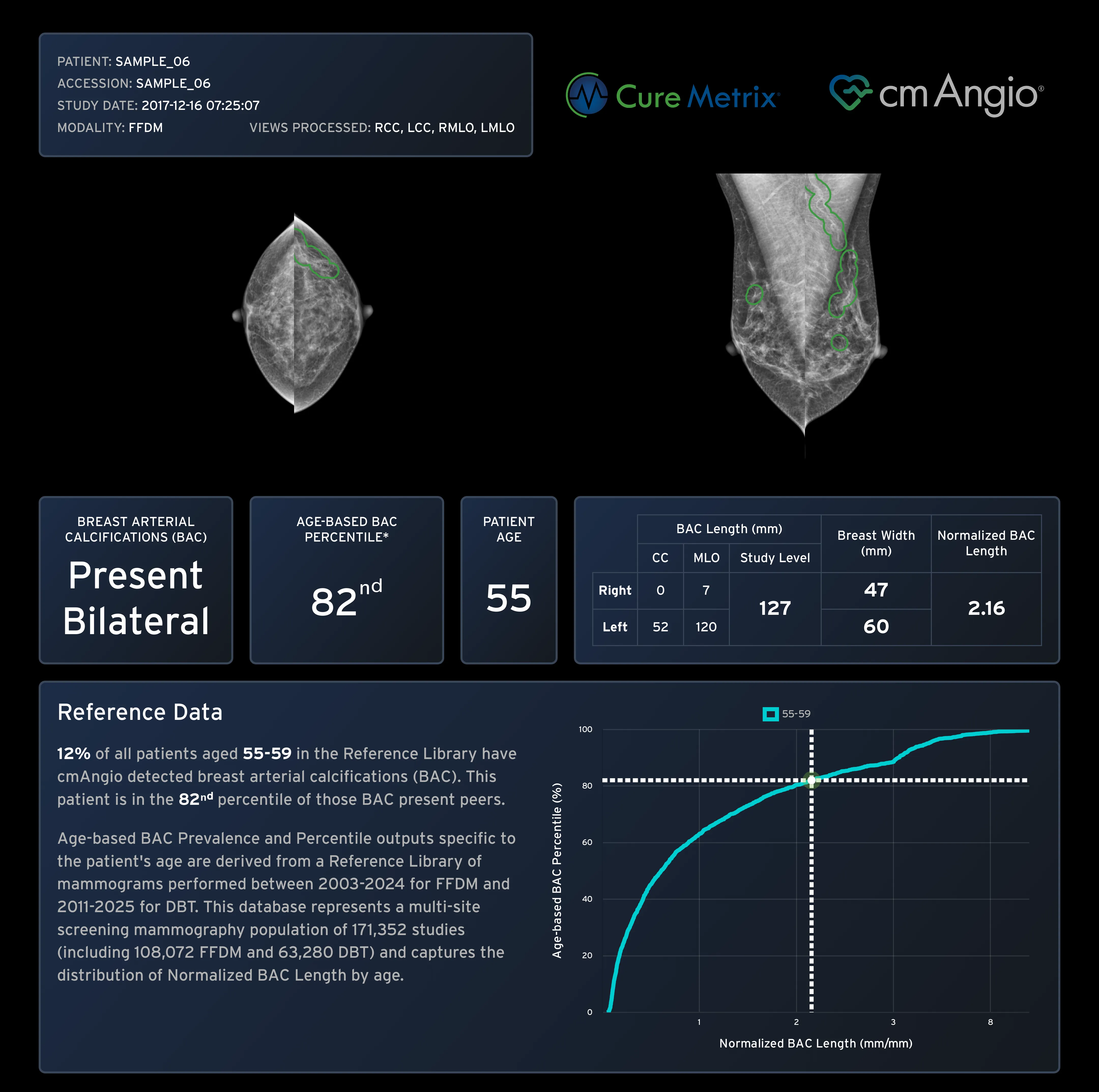
The first and only FDA-cleared, AI-based SaaS solution that detects, quantifies and contextualizes breast arterial calcifications (BAC) on routine screening mammograms — with an AUC of 0.98-0.99 across FFDM and DBT1. Turns a mammogram into a 2-for-1 exam: breast cancer screening and BAC assessment in one visit.
Results in minutes. Read in seconds.
No additional radiation. No new procedures.
1 / 6
Detect. Quantify. Contextualize.
Detect
“Present” or “Present Bilateral”
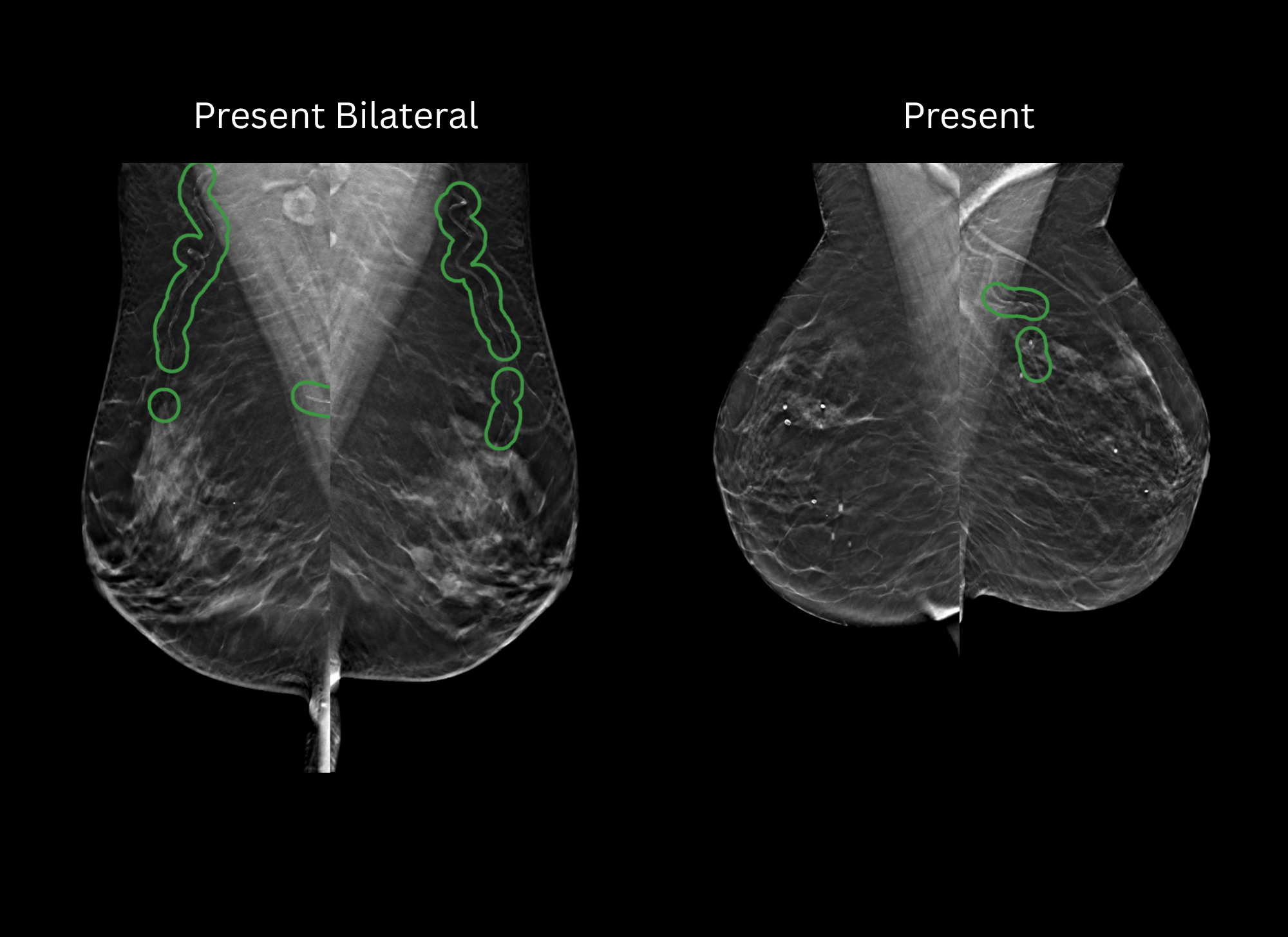
- Detects BAC when present and identifies whether findings are unilateral or bilateral across mammogram views
Quantify
Normalized BAC Length
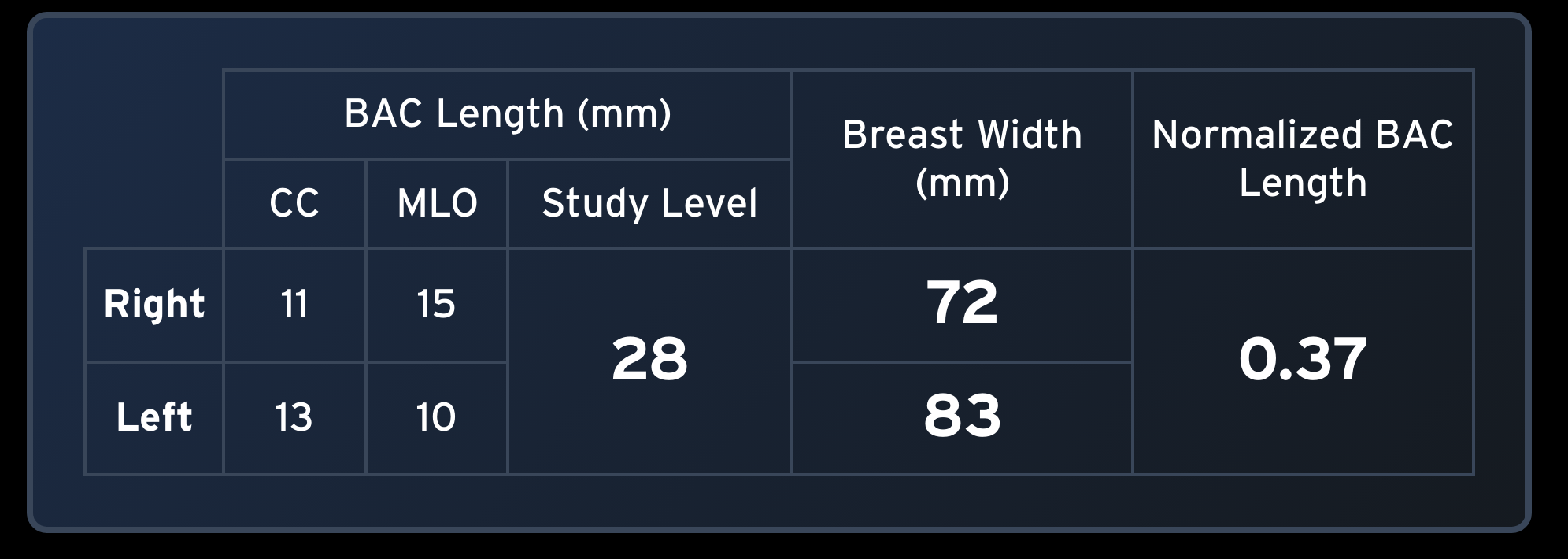
- Quantifies BAC extent with BAC lengths at the view and study level and normalized BAC Length to allow for comparison across varying breast sizes
Contextualize
Age-Based Percentile & Prevalence
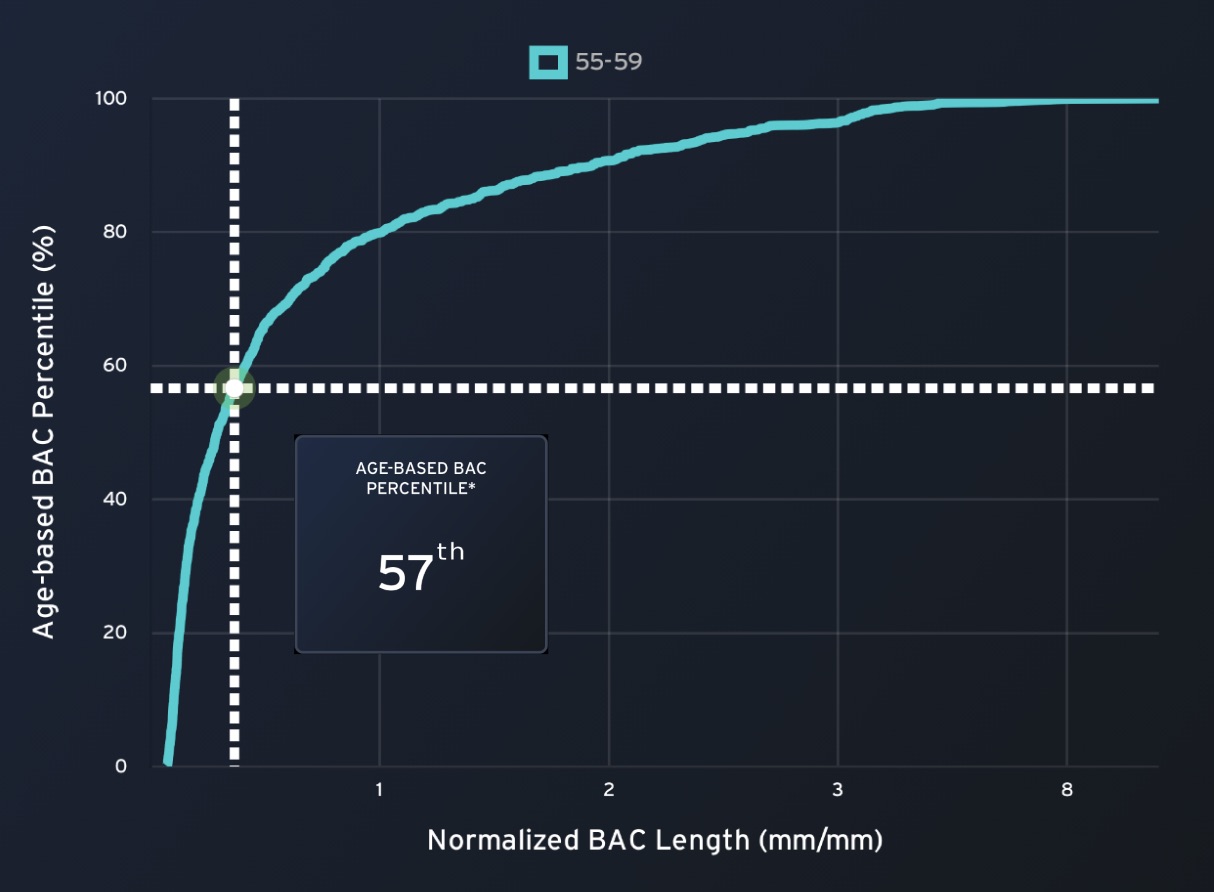
- Contextualizes BAC with Age-Based Percentile and Prevalence using the CureMetrix Reference Library derived from 170K+ studies
Understanding Breast Arterial Calcifications
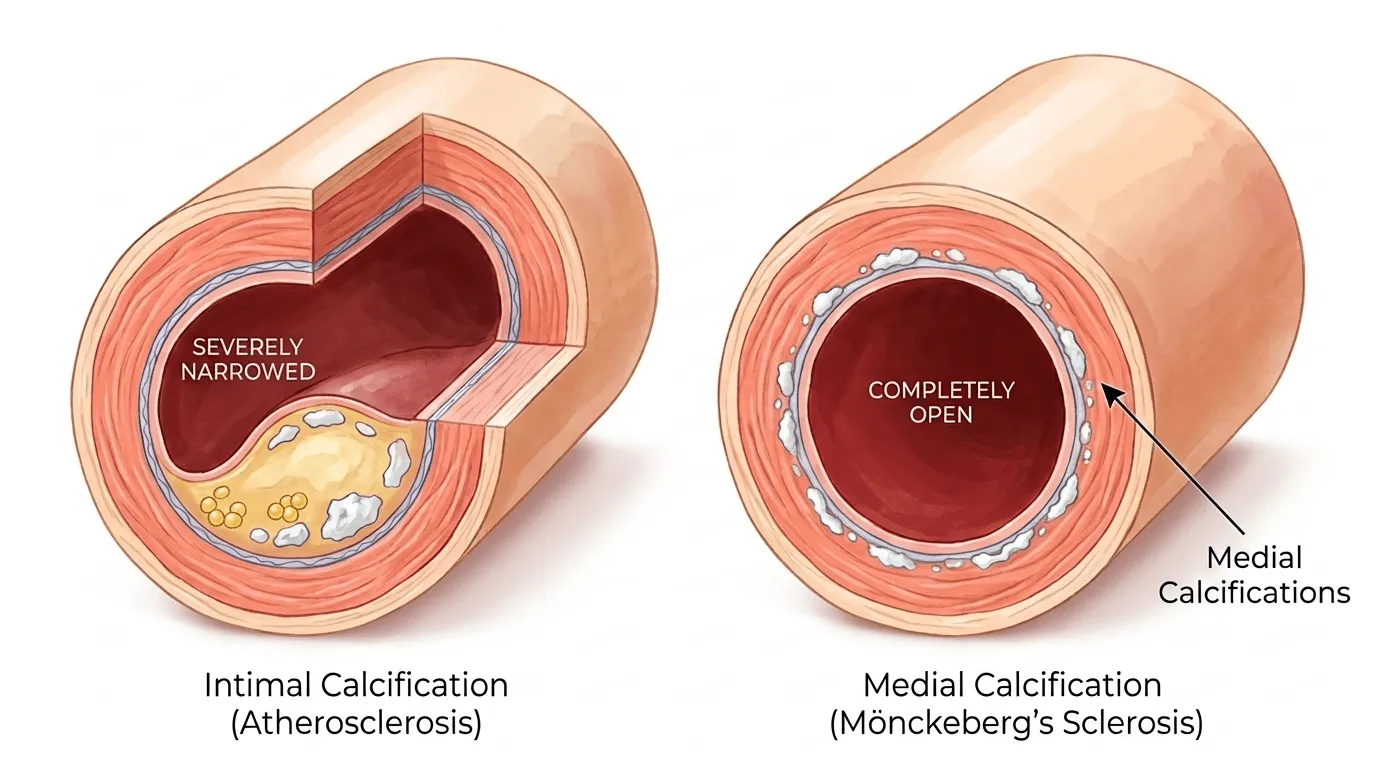
Breast Arterial Calcifications are medial calcifications, different from intimal calcifications, of varying attenuation and length along the walls of the arteries and are currently considered a benign incidental finding in screening mammograms.
Among women who have had screening mammograms, the prevalence of BAC varies from around 12 to 25%2,3. However, less than 5% of BAC in mammograms are reported.
cmAngio Key Features
Built for clinical workflows with flexibility, security, and ease of integration.
Adjustable Operating Point
Adjustable operating point to meet clinical goals and workflow preferences.
FFDM & DBT Processing
Processes both Full Field Digital Mammography (FFDM) and Digital Breast Tomosynthesis (DBT) For Presentation exams from GE and Hologic.
Easy Integration
FHIR-enabled JSON output supports streamlined EHR integration and downstream interoperability.
Automated Processing
BAC segments are localized, marked and displayed on scorecard for review.
Batch Read Ready
Results are returned in minutes and can be read in seconds. Cleared on screening mammograms for women aged 40-90.
All Densities
Demonstrated performance across all breast densities.
Easy to Implement
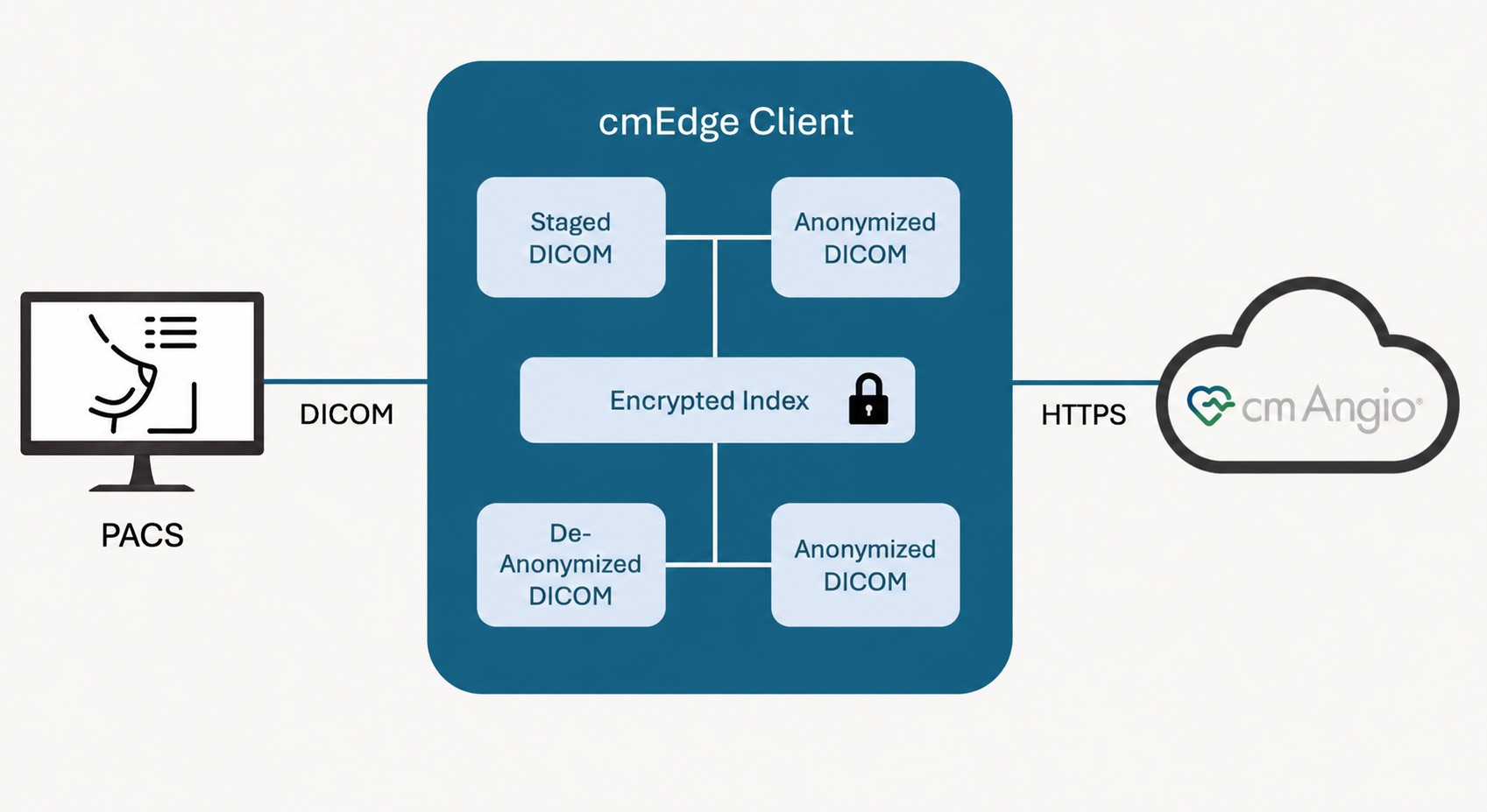
4-WEEK IMPLEMENTATION
Week 1
Foundation & Alignment
Week 2
Technical Deployment
Week 3
Operational Readiness
Week 4
Go-Live
CureMetrix Platform Components
All tailored for your practice

Regulatory Timeline
FDA clearance and ANVISA notifications support cmAngio's growing global presence.
V1.0 — K232367
October 2023
Initial FDA 510(k) clearance for breast arterial calcification detection and localization on FFDM and DBT for Hologic Image Acquisition Systems.
V1.0 — NOTIFICATION No. 81464750139
March 2024
Brazilian Health Regulatory Agency clearance for commercial distribution in Brazil.
V1.6 — K250754
April 2025
Expanded clearance to support GE Image Acquisition Systems.
V1.6 — NOTIFICATION No. 81464750139
April 2026
Updated ANVISA notifications for expanded modality support and commercial availability.
V2.0 — K260980
July 2026
FDA-cleared next-generation platform introducing BAC quantification, age-based contextualization, enhanced scorecards, CureMetrix Reference Library, and FHIR-enabled interoperability.
BAC Detection, Quantification, and Contextualization Starts Here
See how cmAngio can unlock BAC insights from existing mammography workflows, empowering care teams with actionable detection data.
Request cmAngio Demo
Fill out the form below and our team will get back to you within 24 hours to schedule your personalized demo.
Or schedule directly with our National Account Team: Book a demo now
References
- [1]FDA 510(k) K260980 — cmAngio AI-based software for breast arterial calcification detection and localization. Performance data on file.
- [2]Loberant et al. "Prevalence and Degree of Breast Arterial Calcifications on Mammography: A Cross-sectional Analysis." Journal of Clinical Imaging Science, vol. 3, 27 Sep. 2013. doi:10.4103/2156-7514.11901
- [3]Iribarren et al. "Breast Arterial Calcification: a Novel Cardiovascular Risk Enhancer Among Postmenopausal Women." JACC: Advances, 2022.