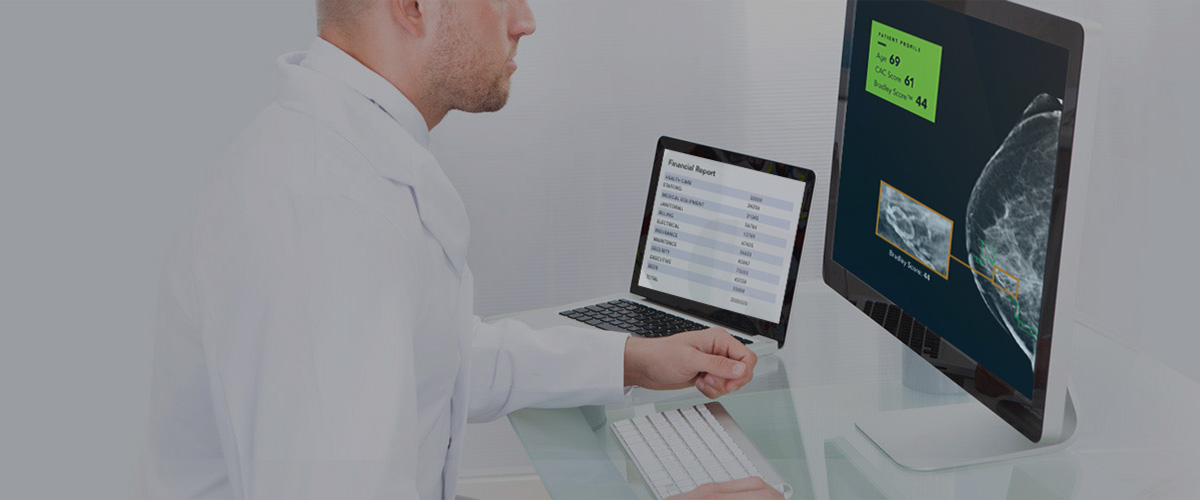
Your Body. Your Health. Your Right to Know.
Ask for Angio
Your mammogram has more to say. Make sure you hear it.
Get more from your mammogram. cmAngio®, the first and only FDA-cleared solution that detects, measures, and provides additional age-based context for Breast Arterial Calcifications (BAC) from your routine screening mammogram.
No additional radiation. No new procedures.

Your Health, Your Voice
Take Control of Your Mammogram
It is your body, your imaging, and your right to know what is in your mammogram.
Your mammogram can tell you more than you may realize. When you Ask for Angio®, you're taking a more active role in your breast health by requesting cmAngio® to detect, measure, and provide age-based context for Breast Arterial Calcifications (BAC) visible on your mammogram.
Why BAC Matters: BAC is a common mammogram finding that may be associated with increased health risks. Its growing importance is leading some states to require that women be informed when BAC is found on their mammogram.
Maryland Is Leading the Way
House Bill 1364, signed into law in April, 2026 in Maryland, makes Maryland the first state in the nation to require that women be notified if breast arterial calcifications (BAC) are detected during their screening mammogram.
This groundbreaking legislation recognizes what CureMetrix has been saying all along: women have a right to know what is in their mammogram. HB1364 ensures that no BAC finding goes unreported to the patient — setting a precedent that could inspire other states to follow.
Detection, Measurement, and Context Scorecard
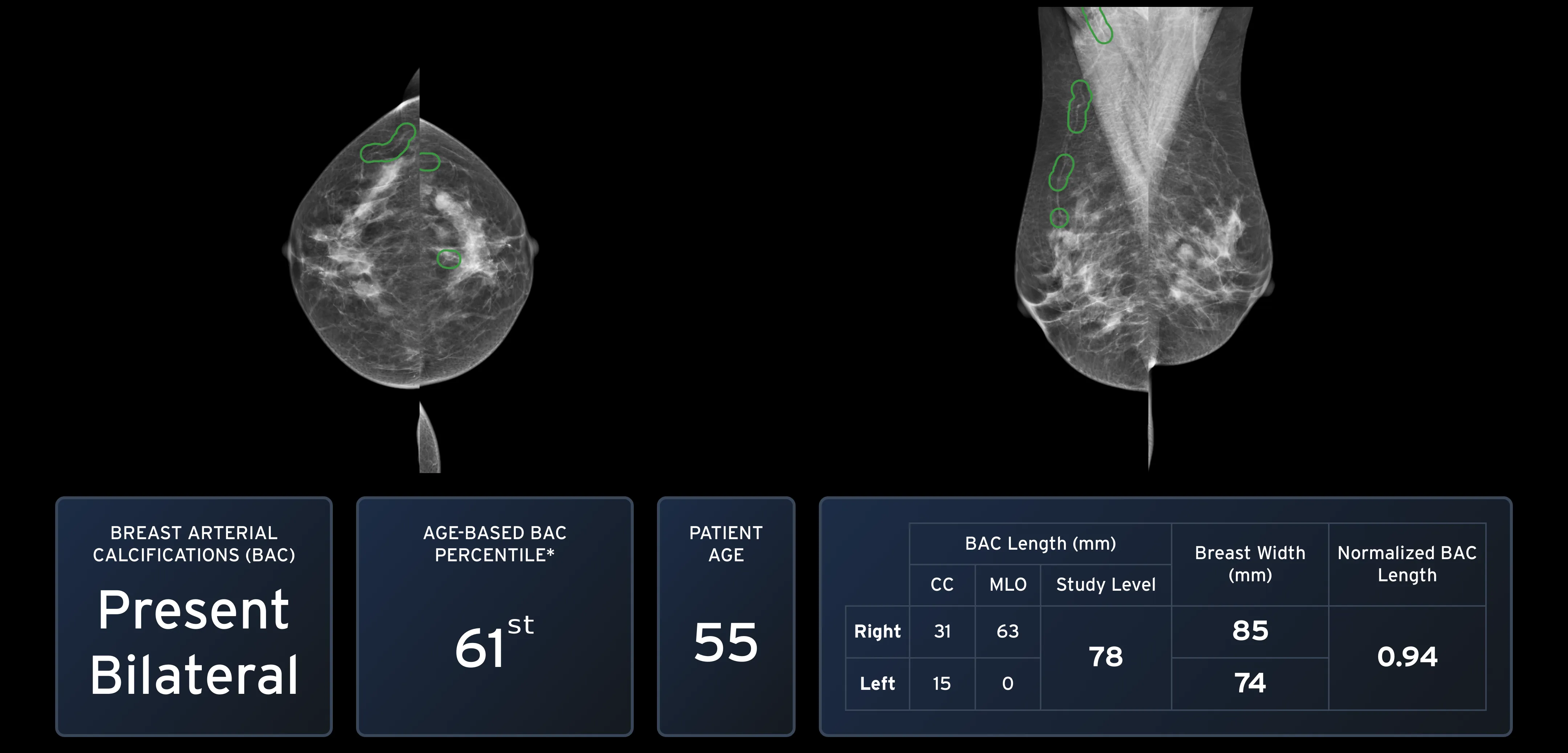
cmAngio generates a clear, easy-to-understand scorecard that includes BAC detection, measurements, and age-based context for your radiologist to review.
Why Ask for Angio?
Your mammogram can do more. Here is what cmAngio adds to your standard screening.
FDA-Cleared
The first and only FDA-cleared AI solution that detects, measures, and provides additional context for breast arterial calcifications from your routine screening mammogram.
No Additional Screening
Your mammogram becomes a 2-for-1 exam. No extra appointment, no extra radiation, no extra effort on your part.
Results in Minutes
cmAngio reads your mammogram in minutes and provides BAC detection, measurements, and additional context for your radiologist to review.
For All Women
Women aged 40-90 undergoing screening mammography can benefit from BAC assessment, regardless of breast density.
How It Works
Four simple steps from scheduling to results.
Schedule Your Mammogram
Book your annual screening mammogram as you normally would at a center that offers cmAngio.
Ask for Angio
When you check in, simply say: "I'd like my mammogram analyzed with cmAngio, please."
AI Analysis
cmAngio analyzes your mammogram to detect and assess any breast arterial calcifications present.
Results Reviewed
Your radiologist reviews the AI findings, including BAC detection, measurements, and additional context, before including the results in your mammography report.
What Are Breast Arterial Calcifications?
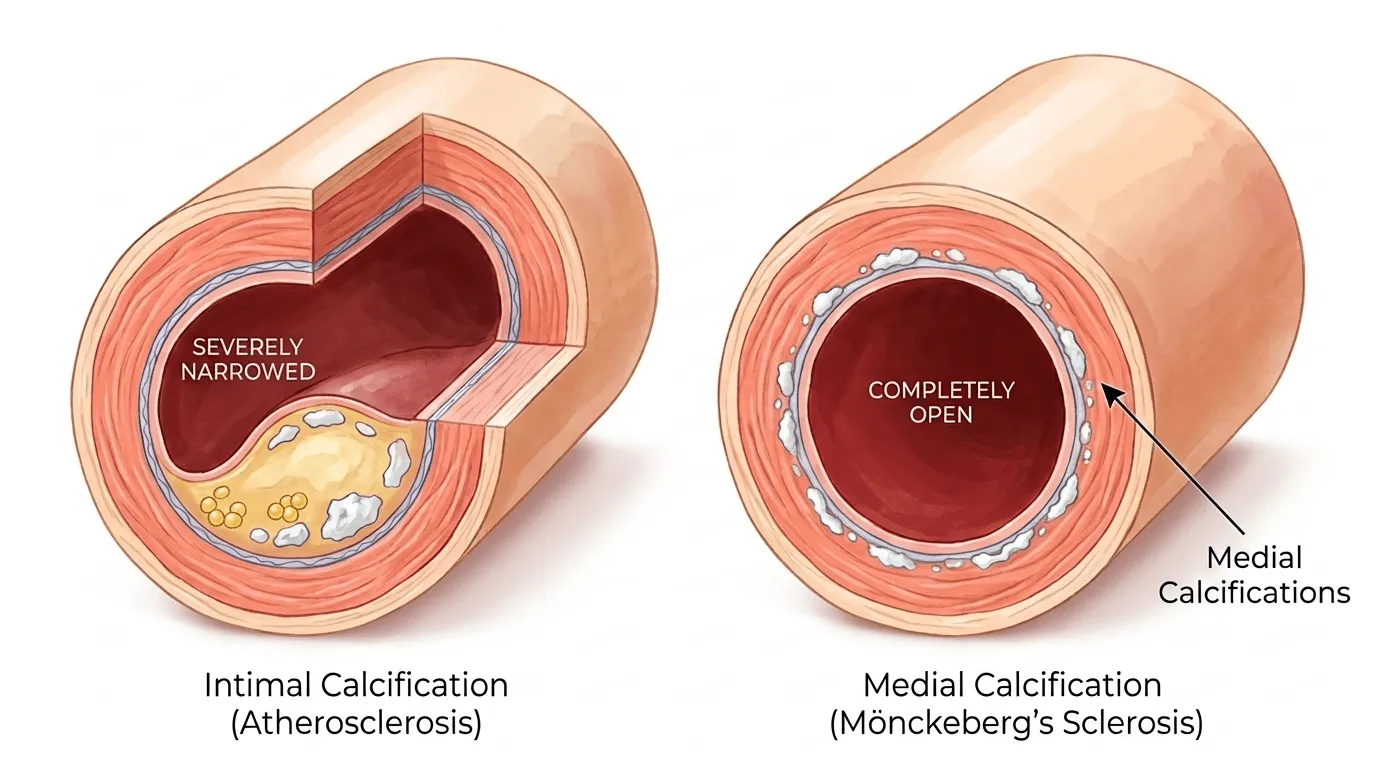
Breast Arterial Calcifications (BAC) are calcium deposits that form along the walls of the arteries in your breast tissue. They appear as bright white lines on mammogram images and are often an incidental finding during routine breast cancer screening.
Studies show that “between 12% and 25% of women who undergo screening mammography have some degree of BAC.”1,2 Yet fewer than 5% of these findings are ever documented or reported to the patient.
Frequently Asked Questions
Why does breast arterial calcification matter?
The medical community has a growing interest in what BAC may tell about women's health. The ACR BI-RADS® Atlas, Mammography Chapter (2025 ed.) — the standard reference guide for mammography practice — states that “recent evidence suggests the presence of BAC is correlated with increased risk of cardiovascular disease” (p. 51).
This means that when BAC is identified on your mammogram, it may be worth discussing with your physician as part of a broader conversation about your overall health. BAC may or may not be clinically important for you. Its significance depends on many factors, including:
- Your age
- Your medical history
- Your family history
- Your current health conditions
- Your BAC amount
- Other clinical factors your physician is aware of
Whether any follow-up is appropriate is a decision to be made between you and your healthcare team, who can consider this finding along with your overall health.
What is cmAngio?
cmAngio is FDA-cleared, proprietary artificial intelligence (AI) software that detects breast arterial calcifications (BAC) on both Full Field Digital Mammography (FFDM) and Digital Breast Tomosynthesis (DBT) screening mammograms. In addition to identifying BAC, it provides objective measurements, age-based context, and marks BAC segments on thumbnails for easy localization.
Why should I ask my imaging center for cmAngio?
Most BAC findings go unreported because there are no established guidelines for identifying and documenting them. By asking for cmAngio, you are requesting that your mammogram be analyzed by AI to detect, measure, and document any BAC that may be present, providing your radiologist with additional information to review.
Will I need an extra mammogram?
No. cmAngio works from your routine screening mammogram. It is a 2-for-1 exam: your regular breast cancer screening plus BAC detection and localization, with no additional radiation or procedures required.
Can I ask for cmAngio if I already had a mammogram this year?
Yes. Prior screening mammograms may be processed by cmAngio, depending on the imaging center's workflow and technical configuration. Contact your imaging center to ask whether retrospective processing is available.
Is cmAngio covered by insurance?
Like many new healthcare technologies, cmAngio is not currently covered by insurance. However, the out-of-pocket cost may be paid using your HSA or FSA account.
Am I too young or too old for a cmAngio assessment?
All women may benefit from a BAC assessment regardless of age. Identifying what's in your mammogram is important at every stage of life. However cmAngio is tested and cleared on women aged 40-90.
References
- [1]Loberant et al. "Prevalence and Degree of Breast Arterial Calcifications on Mammography: A Cross-sectional Analysis." Journal of Clinical Imaging Science, vol. 3, 27 Sep. 2013. doi:10.4103/2156-7514.11901
- [2]Iribarren et al. "Breast Arterial Calcification: Association with Diabetes Mellitus and Cardiovascular Risk." Journal of Women's Health, 2019.
Disclaimer: FDA 510(k) K260980 — cmAngio AI-based software for breast arterial calcification detection, quantification and contextualization. Performance data on file.
Ask for Angio at Your Next Mammogram
Your mammogram can do more. Ask your imaging center if they offer cmAngio.